
NYT Crossplay: Play and Spell
The New York Times CompanyWord
4.81.25K Reviews
- Version
- 2.38.0
- Installs
- 1.00M
- Age Rating
- Everyone
Screenshots
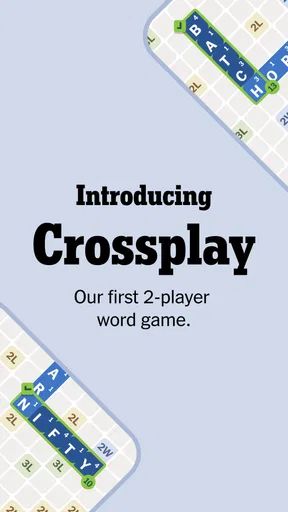
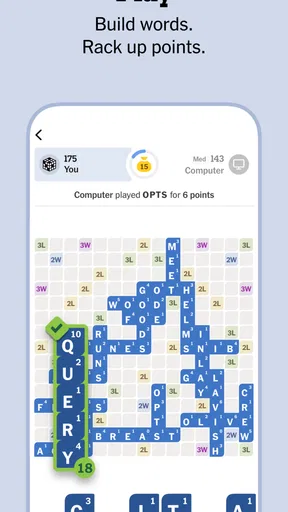
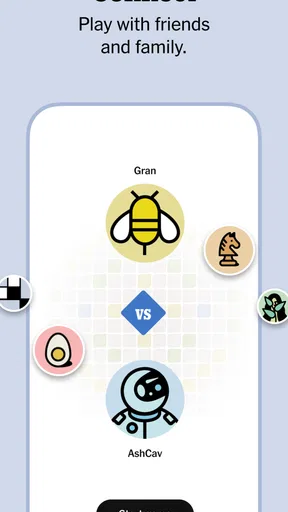
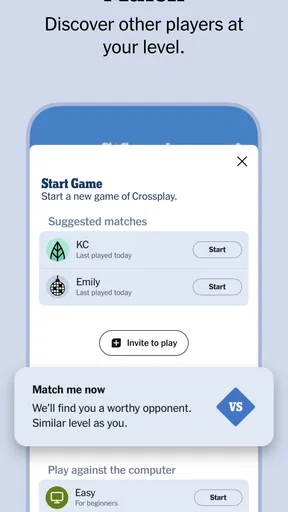
Our Review of NYT Crossplay: Play and Spell
 Analysis by Appyee
I went into NYT Crossplay: Play and Spell expecting a familiar word game, but its most important idea is more focused than that: it turns word-building into a direct two-player contest. Instead of treating a puzzle as something I solve alone and then forget, it gives me a reason to think about every letter in relation to another person’s move. That small change makes the game feel more social, more tense, and occasionally much more personal than a standard daily word puzzle.
The game comes from The New York Times Company and sits in the word-game category. It is free to install, suitable for everyone, and currently appears as version 2.26.0 for devices running iOS or Android 10 and above. There are optional in-app purchases, priced from $5.99 to $49.99 per item, so I would treat the free download as the starting point rather than assuming every part of the experience is included without cost.
What appealed to me most was the simple promise behind the format: go from word to word while trying to outthink a friend. That is easy to understand, but it is not quite the same experience as playing a solo spelling game. Here, a good word has two jobs. It needs to be valid, and it needs to leave me in a better position than the other player. That second concern is where the real depth begins.
Why the two-player word board matters
The central capability is the head-to-head word board. I am not only searching my vocabulary for something acceptable; I am watching the board as a shared space. A move can be useful because it creates an opportunity, blocks an obvious path, or forces the next player to work with an awkward combination of letters. The result is a game that rewards awareness as much as raw vocabulary.
That distinction matters if you already play solo word games. In a typical daily puzzle, my goal is to reach the answer, improve a score, or maintain a personal streak. In this game, the objective feels closer to a compact board-game duel. I have to read the position, estimate what the other player may see, and decide whether a safe word is better than a clever but risky one.
I found that this makes ordinary words more interesting. A long or unusual word is not automatically the best move. Sometimes a modest word fits the board more cleanly and gives me control over what happens next. At other times, choosing the word that looks obvious is exactly what allows the opponent to respond comfortably. The game therefore encourages a habit that many word apps do not: I started considering the consequences of a word before celebrating that I had found it.
The strongest part of the design is the shift from “Can I find a word?” to “What does this word make possible?” That is a meaningful difference, especially for players who enjoy games where a simple rule creates room for judgment. It also explains why the experience can remain engaging even when the basic action is familiar.
Reading the board instead of chasing impressive words
My first instinct in a word game is often to reach for the most elaborate word I know. Crossplay makes that impulse less reliable. A complicated answer may look satisfying, yet the position can matter more than the word itself. I had better results when I paused to examine open spaces, likely continuations, and the routes the other player might use.
This creates a useful mental split. One part of my attention searches for vocabulary, while another part evaluates risk. If I play too aggressively, I may expose a convenient route. If I play too cautiously, I may surrender the initiative. That balance is the reason the game feels more strategic than a simple spelling test, even though the rules remain approachable.
It also gives the game a natural learning curve. A new player can begin by making valid moves and learning the rhythm of the board. With more experience, the same player can start thinking about tempo, defensive placement, and the opponent’s likely choices. I appreciate that progression because it does not require a long tutorial or a complicated ruleset before the game becomes interesting.
How a match feels in everyday use
The best way I can describe a typical session is as a series of small decisions rather than one long puzzle. I look at the current arrangement, search for a word that fits, and then consider whether the move improves my position. Once the other player responds, the board changes meaning. A space I ignored a moment earlier may suddenly become important, and a word I thought was harmless may turn out to have opened a useful possibility.
That back-and-forth gives the game a different pace from an app built around a fixed daily answer. I do not have to wait for a new puzzle to feel that I am making progress. The opponent supplies the variation. Even when the same general vocabulary is involved, the experience changes because another person’s decision has altered the problem in front of me.
I would not call it a frantic game. Its appeal is closer to a quiet contest where the pressure comes from knowing that a real person may notice an opportunity before I do. That makes it suitable for short sessions, but it also gives me a reason to return to a match after a quick break. I can play with concentration when I have time, or make a move during a spare moment and come back later when the situation deserves more thought.
One practical tip helped me more than I expected: I stopped judging a move only by the number of letters it used. Length can be attractive, but board position and future flexibility are often more useful. A shorter word that preserves several options may be stronger than a longer word that leaves me boxed into one obvious continuation. That is not a rule I would have carried into every word puzzle, but it becomes important here.
A realistic after-work match
Imagine finishing dinner and wanting something more engaging than scrolling, but not wanting to begin a large game. This is where the format makes sense to me. I can challenge a friend, make a thoughtful move, and keep the conversation going without needing a full uninterrupted evening. The match becomes a shared activity that fits around ordinary schedules rather than demanding a dedicated gaming session.
The social value is not limited to close friends who already share the same taste in games. Because the basic concept is easy to explain, I could introduce it to someone who normally avoids complex board games. The strategic layer appears gradually, so a first match can remain accessible while later matches become more competitive. That combination of simple entry and room for improvement is one of the game’s better qualities.
There is also a nice difference between playing against someone who knows a lot of words and playing against someone who reads the board well. Vocabulary helps, but it does not settle every position. A player with a smaller word bank can still make smart choices, while an experienced player may win by managing opportunities rather than showing off obscure spelling.
For families, the everyone content rating makes the game easier to consider as a shared word activity. I would still expect the enjoyment to depend on the players’ patience and ability levels. A large vocabulary gap can make a match feel uneven, but the board-based nature of the game gives less experienced players something to learn beyond memorizing difficult words.
The tradeoffs behind the friendly format
The two-player focus is also the game’s main limitation. If I want a purely solo experience, a daily word challenge or crossword-style app may suit me better. Those alternatives let me set my own pace and measure improvement against my previous performance. Crossplay is more dependent on the energy of the match, so it is strongest when I have another person who is willing to play regularly.
That dependence can affect the feeling of momentum. A solo puzzle is always ready when I am. A head-to-head game has more emotional weight, but it also relies on both players staying engaged. Anyone looking for an instantly complete experience every time they open a word app should understand that the social structure is part of the appeal and part of the compromise.
The game may also frustrate players who dislike uncertainty. In a solo puzzle, I can often identify a clear target and work toward it. Against another person, the board can change in a direction I did not expect. A move that seemed optimal may become awkward after the response. I enjoy that unpredictability, but someone who prefers complete control may find a traditional crossword or an untimed spelling exercise more relaxing.
The free price lowers the barrier to trying it, although the presence of optional purchases is worth keeping in mind. I would begin with the free experience and decide whether the game earns a place in my routine before spending anything. That is especially sensible for casual players who may enjoy an occasional match but do not expect to play often.
Another tradeoff is the narrowness of the core appeal. This is not trying to be a broad collection of unrelated puzzles. Its identity is tied to word-versus-word play on a shared board. That focus is a strength when I want exactly that kind of contest, but it means the app is not the best single choice for someone seeking crosswords, number puzzles, trivia, and solo brain-training activities in one place.
Tips for getting more from the board
My first recommendation is to slow down before making a move that looks brilliant. Ask what the opponent receives after I play it. This simple check catches a common mistake: choosing a word because it is satisfying for me without noticing that it creates an even better reply for the other player.
Second, I would pay attention to flexibility. Keeping multiple possible directions open can be more valuable than committing early to one attractive route. This is particularly helpful when I am unsure which words the opponent may have available. Flexibility gives me room to adapt instead of forcing me to depend on one narrow plan.
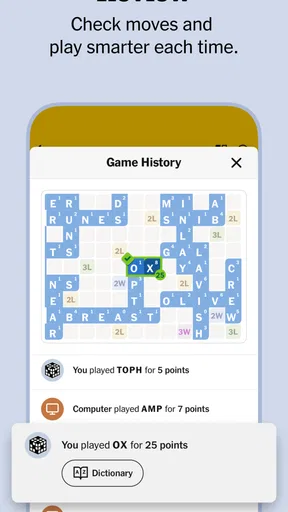
Third, I would treat losses as board-reading lessons rather than vocabulary failures. After a close match, I can think about the turning point: Did I overlook a defensive move? Did I assume the opponent would choose the obvious continuation? Did I use a strong word at the wrong moment? Those questions make improvement more concrete than simply trying to learn longer words.
A fourth insight is that the game works well as a conversation starter. Because each move has a visible consequence, friends can discuss why a choice worked or failed without needing to explain a complicated ruleset. That makes it more social than playing beside someone on separate screens, even though the actual activity remains centered on words.
Who should download it
I think this game is best for people who enjoy wordplay but want an opponent to make the experience less predictable. It suits players who like compact strategy, friendly competition, and the satisfaction of finding a useful word at exactly the right time. It is also a good fit for someone who has tried solo word puzzles and wants a reason to involve a friend without learning a large rulebook.
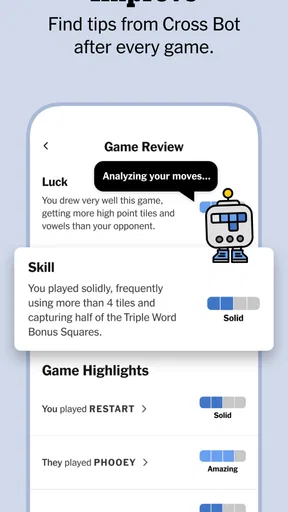
It may appeal particularly strongly to players who enjoy analyzing choices after the fact. The pleasure is not only in winning. I also liked noticing how a small placement changed the next decision, or realizing that a defensive move had been more valuable than an impressive answer. If that kind of cause-and-effect thinking sounds enjoyable, the format has enough substance to hold attention beyond a first match.
I would be more cautious about recommending it to someone who wants a private, predictable routine. If your ideal word game is a calm daily exercise with no opponent, no waiting, and no need to coordinate with another person, a crossword or solo guessing game will probably serve you better. The same applies if you dislike competitive pressure or find it discouraging when another player’s move changes your plan.
It is also worth considering the device requirement before installing. The current version supports iOS and Android 10 or newer, so anyone using an older operating system may need to check compatibility first. For supported devices, the game has a relatively clear entry point: it is free, rated for everyone, and has built enough interest to show a 4.7 average from around twenty thousand ratings, alongside more than five hundred thousand installs.
My recommendation after playing
NYT Crossplay: Play and Spell succeeds because it gives a familiar word activity a genuinely different purpose. I am not simply trying to prove that I know words. I am trying to use them well in a changing position against another person. That makes each move more meaningful and gives the game a stronger social identity than a standard solo word challenge.
I would recommend starting with a friend who enjoys thoughtful competition rather than someone who expects instant, high-speed action. Take time to watch how the board changes, resist the urge to choose the longest word automatically, and look for the move that leaves you with the most useful next choices. Those habits reveal the strategic layer that a quick glance at the store summary would not show.
For me, the game is at its best as a small shared ritual: a match during a break, a rematch later in the day, or a friendly contest that becomes more interesting as both players learn each other’s habits. It is not a replacement for every kind of word puzzle, and its reliance on two-player interaction will not suit everyone. But if you want vocabulary, board awareness, and friendly rivalry in the same compact experience, this is a convincing free game to try.
Privacy and Permissions
See what permissions an app requests and how it handles your data.
- Contacts
- read your contacts
- Wi-Fi connection information
- view Wi-Fi connections
- Other
- view network connections, full network access, prevent device from sleeping, Google Play license check
Verdict
Strengths of NYT Crossplay: Play and Spell
- Daily puzzles provide a fresh challenge without requiring long play sessions.
- Wordplay helps strengthen vocabulary, spelling, and pattern-recognition skills.
- Clean interface makes clues, grids, and game controls easy to follow.
- Progress tracking encourages regular play and helps build solving habits.
- Works well for both casual players and experienced crossword fans.
Limitations of NYT Crossplay: Play and Spell
- Most content requires a paid New York Times Games subscription.
- Some puzzles may feel too difficult for beginners without hints.
- Daily challenges can become repetitive for players seeking more variety.
- Hints and reveals may reduce the satisfaction of solving independently.
- A stable internet connection may be needed for new puzzle content.
Other Releases by The New York Times Company
View All

NYTimes: US and Global News
News & Magazines4.7

The Athletic: All Sports News
Sports4.5

NYT Cooking: Quick Tasty Meals
Food & Drink4.9
Similar Picks in This Category
View All
Word Search - Word Puzzle Game
Bluetile4.8

Word Search Quest - Puzzles
Blackout Lab4.8

CodyCross: Crossword Puzzles
Fanatee, Inc.4.7

Words of Wonders: Crossword
Fugo Games4.9

Wordscapes: Word puzzle game
PeopleFun4.7

Word Search Explorer
PlaySimple Games4.9
Frequently Asked Questions
What is NYT Crossplay: Play and Spell?
NYT Crossplay: Play and Spell is a word-focused puzzle experience from The New York Times, designed for players who enjoy forming words, solving clues, and testing their vocabulary. It combines approachable daily-style challenges with a polished interface and gradually increasing difficulty. The game is suitable for short sessions, although completing tougher puzzles may require patience, experimentation, and a strong command of English words.
Is NYT Crossplay: Play and Spell free to download and play?
The app may be available to download at no initial cost, but access to all puzzles, features, or ongoing content can depend on The New York Times’ subscription model. Some users may be able to try selected content before subscribing, while unlimited access may require a paid plan. Before downloading, check the current App Store or Google Play listing for pricing, trial terms, and regional availability.
Does the game require an internet connection?
An internet connection is generally recommended because the app may need to load new puzzles, synchronize progress, verify account access, and deliver updates. Certain previously loaded content might remain available temporarily without a connection, but offline functionality can vary by device and account status. If you regularly play while traveling, open the app online first and confirm which puzzles remain accessible offline.
Is NYT Crossplay: Play and Spell suitable for beginners?
Yes, the game is approachable for beginners, especially for players who enjoy word games but do not want complicated controls or lengthy tutorials. The basic concept can usually be understood quickly, while more challenging puzzles provide room to improve. However, some answers may depend on less common vocabulary, spelling knowledge, or recognizing word patterns, so new players should expect occasional difficulty rather than a completely casual experience.
Are there advertisements, accounts, or in-app purchases to consider?
The exact experience depends on the current version, platform, and subscription status. Users may be asked to sign in or create a New York Times account to synchronize progress or access subscriber content. Paid subscriptions or in-app purchases may unlock additional puzzles and features, while advertising and promotional messages can vary. Review the store description and the app’s privacy and payment information before confirming any purchase.
Play our best games!


